Europe in 1914 and Ethnic Nationalism
The World at War
The French Revolution (1789 - 1815)
- Liberty, Equality, Fraternity
- Universal Male Suffrage (1792)
- Nationalism
- National Convention (1792-1795)
- Napoleon Remade the Map of Europe
- Ended Holy Roman Empire
- Era of Small states Replaced with Large states
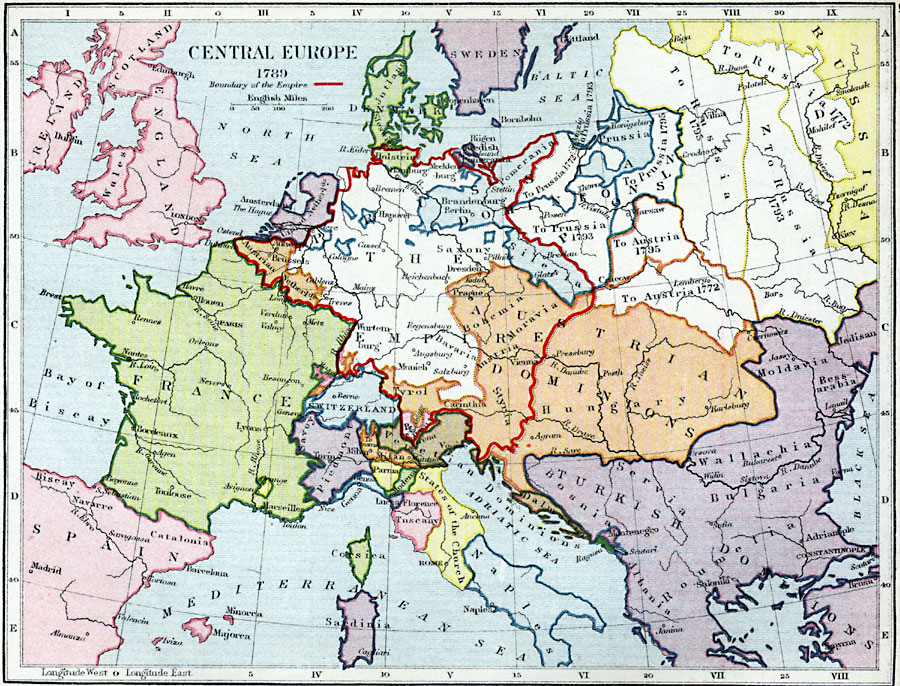
Europe 1789
![]()
Europe in 1815
![]()
Imperialism
- Old Colonialism
- Settler Colonialism
- Replaced indigenous populations
- New Imperialism
- Ruled through and over indigenous populations
- Few settlers
- Severe inequality between metropole and colony
Britain in India
- Beginning of New Imperialism.
- Created market for British goods.
- Destroyed indigenous industries.
- 27% → 2% of world manufacturing output (1750-1900).
Nationalism
- One of the greates impacts of the French Revolution.
- Nations are imagined communities.
- To define who is a part of the community is to also define who is excluded form the community.
National Unifications: Italy (1861-1870)
- North Italy led by Piedmont-Sardinia against Lombardy (Austria).
- South led by Giuseppe Garibaldi (1807-1882)
- 1860, Southern states voted to unify with Piedmont-Sardinia.
- 1866, war with Austria gained Ventia from Austria.
National Unifications: Germany (1866-1871)
- Prussia and Otto von Bismarck
- Denmark, Scheswig (Danish), Holstein (Ger), and Lauenburg (Ger)
- Austro-Prussian War (1866)
- Franco-Prussian War (1870-1871)
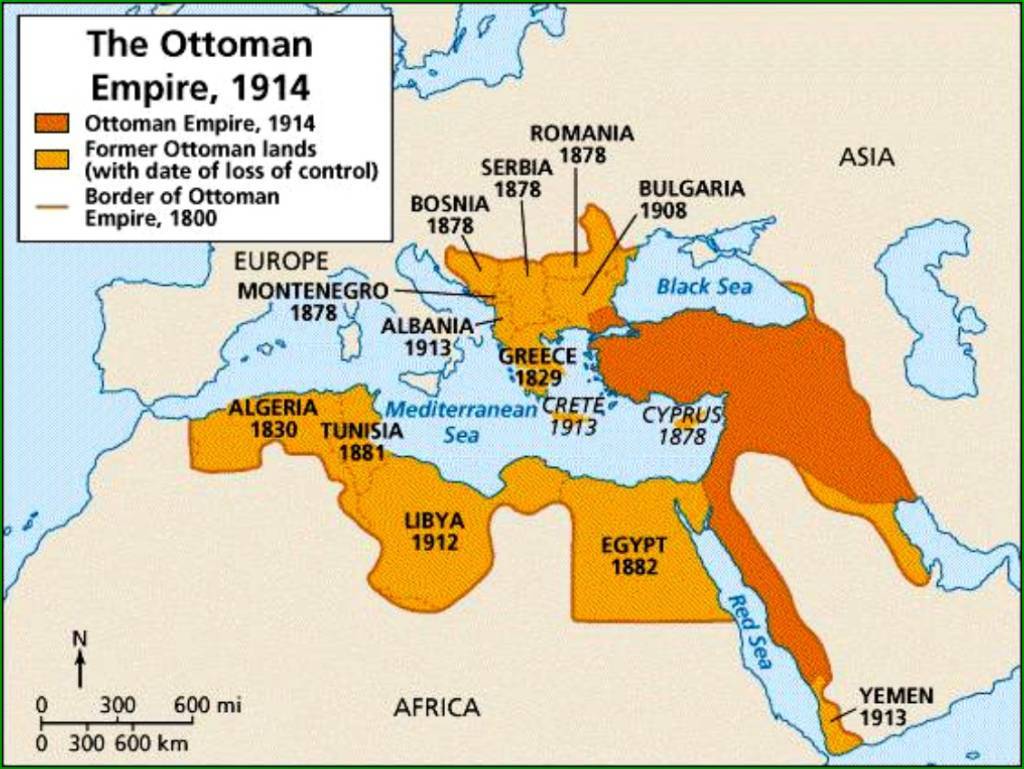
Ottoman Empire in 1900
- Multilingual, multiethnic, multireligious empire.
- Once, the most powerful empire in Europe.
- Slow decline motivated the Scramble for Africa.
- The Eastern Question.
Scramble for Africa
- Scramble for Africa (1880-1900).
- King Leopold II and the Congo Free State.
- Berlin Conference (1884-1885).
- By 1900, only Liberia and Ethiopia were independent.
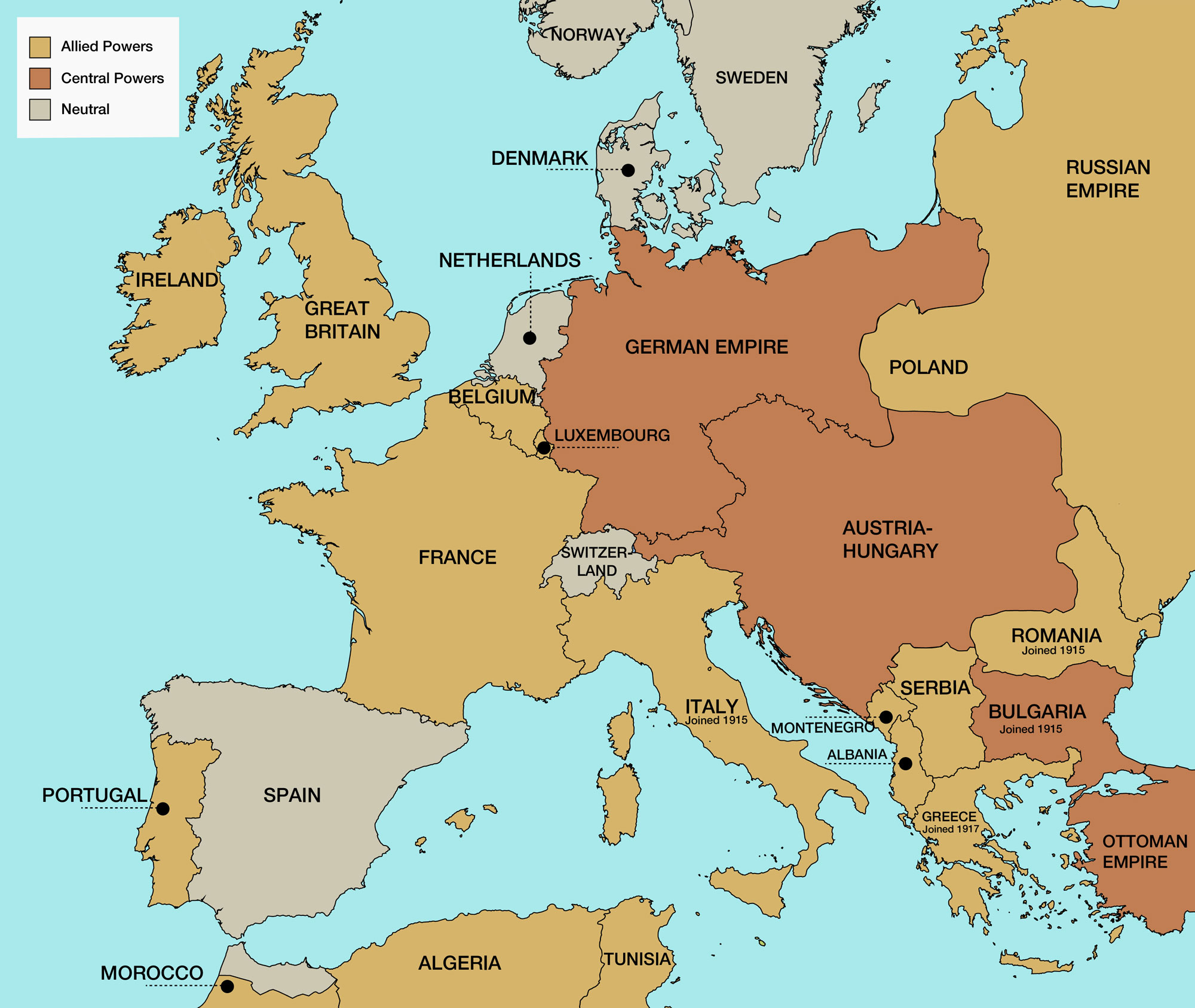
Europe of Empires (1914)
![]()
Map of Europe in 1914
Outcome
- Hypercompetitive environment over territory.
- Union of National-Ethnic rivalries both within and between states.
Social Darwinism and Nationalism
- Social Darwinism
- Survival of the fittest applied to human societies.
- Justified imperialism, racism, and social inequality.
- Alignment of Nationalism, ethnicity, and racism.
- Arthur de Gobineau, Essay on the Inequality of the Races (1853)
- Mixing of races leads to downfall of civilization.
The Dreyfus Affair (1894-1906)
- Alfred Dreyfus, Jewish French army officer, falsely accused of treason.
- Ferdinand Walsin Esterhazy, real culprit, acquitted.
- Sending info to German embassy.
- Antisemitism in France: Dreyfus couldn’t be loyal because he was Jewish.
- 1905 acquitted, 1906 reinstated.
- Significance



Social Darwinism and Nationalism