Creating a Nation
- Common history, culture, language
- Inventing Traditions:
- the Scottish Kilt
- Folk Tales & Grimm’s Fairy Tales
- Trains, Army, Education
- European states before nationalism
- Difference between a nation and a state
- State refers to organized institutions of government, while nations are communities of people.
- European states oftentimes comprised multiple nations of people
- Austria: Germans, Czechs, Magyars (Hungarians), Slovaks, Romanians, Serbians, and Italians.
- There was not thought that a nation and a state should be the same.
- Nationalism
- Came about in France during the French Revolution.
- Developed throughout the rest of Europe in the early 1800s.
- Oftentimes nations were consciously and unconsciously created.
- People searched for common cultural heritage, common histories, and common ethnicities on which to base a claim for autonomy. More often than not these cultures and ethnicities had to be invented or exaggerated
- For instance in France (the place with the most pronounced nationalism at the time) did not have a common language or culture. In the south, many spoke Languedoc and Provençale. Peasants had more in common with other peasants in Germany or Italy than they did with other Frenchmen from Paris.
- People began collecting folk tales from their ethnic past (Grimm’s Fairy Tales are an example).
- They began focusing on creating a modern literature in their own language.
- By 1850s, States gradually began to appropriate nationalism, using the image of a national community to their advantage as a stabilizing area of consensus that cut across class and political lines.
- Process of persuading a population that they share a common history, language, culture.
- The kilt
- Not a pleated separate skirt (but a belted tartan)
- Pleated kilt invented by an Englishman in late 18c.
- Traditional clothing banned by the English after the Jacobite rebellions in 1715 and 1745
- Colonel David Stewart wrote //Sketches of the Character, Manners, and Present State of the Highlanders of Scotland. (1822)//
- created differentiation of clan tartans
- Then publicized at the Celtic society of Edinburgh (1820).
- Then George IV came to Edinburgh
- They wanted to regale him in traditional Scottish dress.
- in preparation, clothiers broght different tartan prints
- The society dutifully designated different prints as belonging to this or that clan.
- Then George IV came to Edinburgh
- Not a pleated separate skirt (but a belted tartan)
- The kilt
Italian Unification (1860, 1866, 1870)
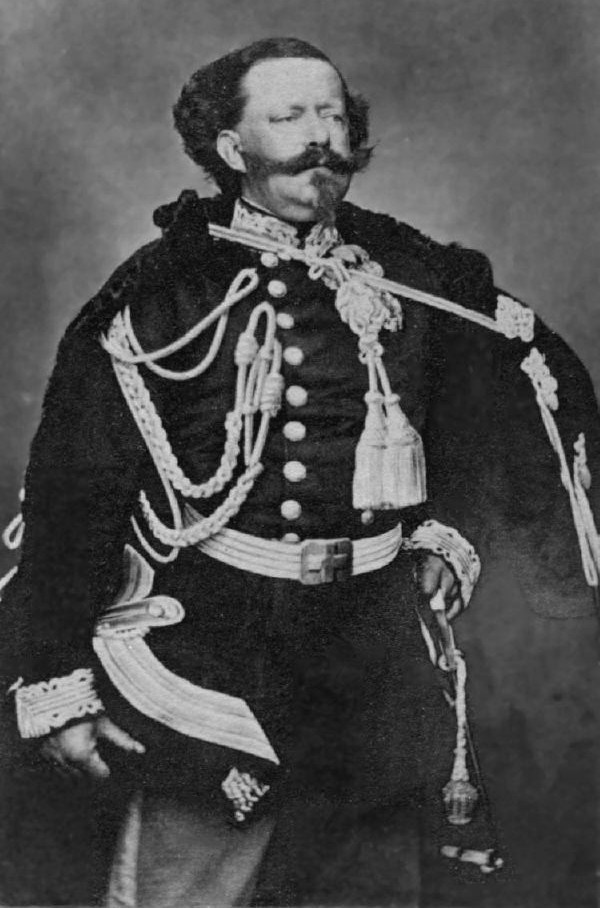
King Victor Emmanuel II (1849-1878)
Alliance with Emperor Napoleon III (1859)
Giuseppe Garibaldi (1807-1882) from Sicily
The Aftermath
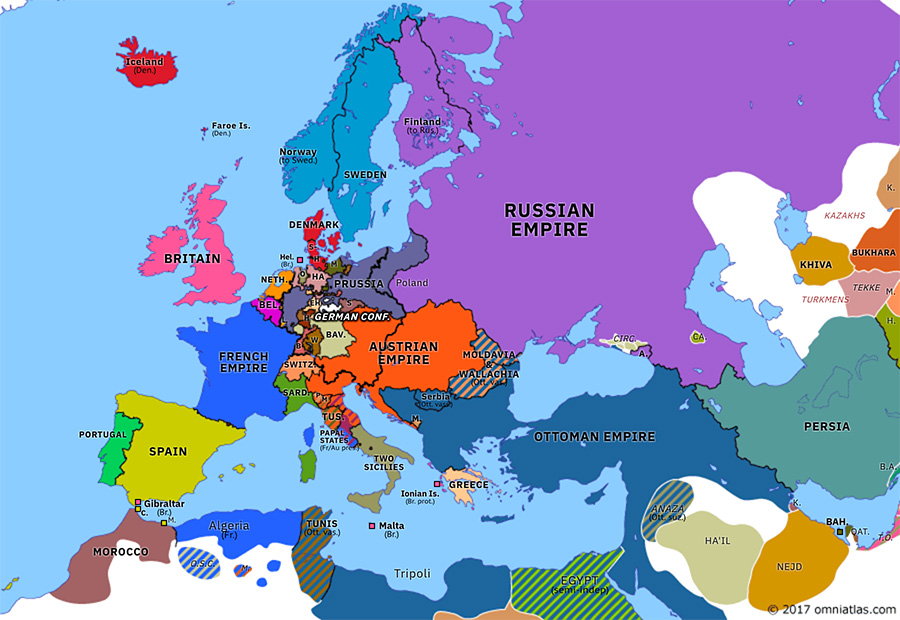

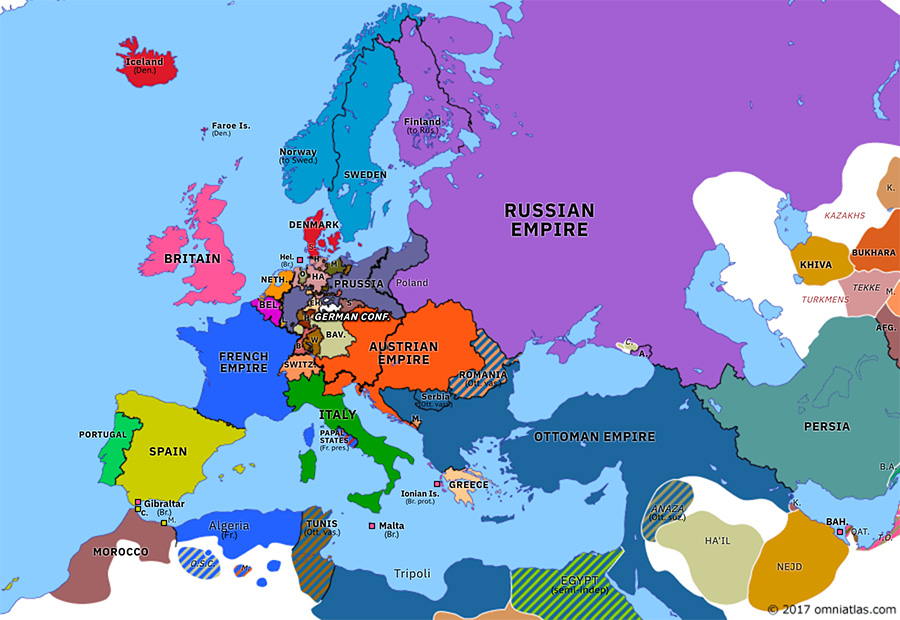
- Unification of Italy
- Much of northern Italy was under the control of Austria (Lombardy and Venetia)
- Product of two separate unification attempts that began at the same time.
- Role of Kingdom of Piedmont-Sardinia
- Count Camillo di Cavour (PM, 1852) named by King Victor Emmanuel II (1849-1878; 1861-1878 as king of Italy)
- Many of the Northern Italians looked to the Kingdom of Piedmont as the unifier of Italy.
- After Cavour was named Prime Minister, he began focusing on the economy in order to equip a large army with the intention of conquering N. Italy.
- Cavour gained the help from France in 1859 to invade Lombardy against Austria.
- Won few significant victories that won him Lombardy that year.
- This inspired popular sentiments throughout the rest of N. and Central Italy hoping for a unified Italy.
- At the same time Giuseppe Garibaldi (1807-1882), a romantic nationalist, raised an army of 1000 volunteers (Red Shirts) in Sicily with the intention of unifying Italy (with underhanded support from Piedmont)
- Quickly took over Sicily, then conquered much of S. Italy.
- Victor Emmanuel then joined forces with Garibaldi in 1860 in Naples, ensuring the Victory.
- 1860, Sicily, Naples, Umbria, and the Marches voted for union with Piedmont.
- By 1866, Italy gained Venetia
- 1870, Italy gained Rome.
German Unification (1863-1871)
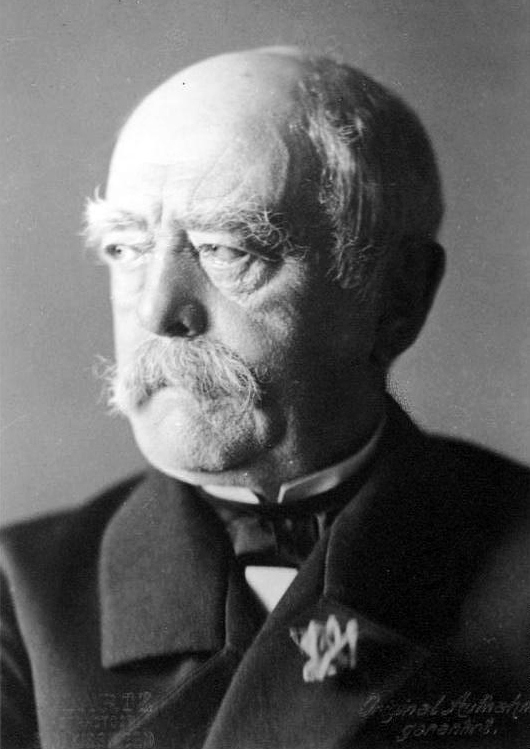
Otto von Bismarck (1815-1898)
1: Scheswig-Holstein (1863)
2: Austrian-Prussia War (1866)
- Unification of Germany
- After Napoleonic wars, German states were organized into 39 states loosely connected in a German Confederation with the two most powerful states as Prussia and Austria
- Prussia vs Austria over the leadership of a united Germany.
- Prussia was the economic and military power of the Germans
- Austria was the cultural power of the Germans
- Otto von Bismarck (1815-1898) was appointed Prime Minister in 1862-71 of Prussia by King William I (1861-1888).
- Bismarck was a determined, brilliant, and ruthless man who had his sights set on unification, but so too did the German people
- He undermined the Prussian Parliament, and the freedom of the Press (which was guaranteed) to gain the necessary support and funds for his foreign policy goals.
- Began reforming the army, creating a professional army.
- From 1863 to 1871, Bismarck maneuvered Prussia into three military engagements to win support for unification and neutralize the Austrian and French forces that opposed it.
- 1st: Schleswig-Holstein (Denmark) (1863)
- Allied with Austria to conquer this territory that was part of Denmark.
- Was a test for the new reformed army of Prussia. Quick decisive victory.
- Created many problems between Prussia and Austria over the leadership of the two states.
- It became clear that war between the two was inevitable, and Bismarck did much to prepare for it.
- Bismarck did much to prevent other powers from intervening.
- Signed alliance with Italy against Austria.
- Proposed to reform the constitution of the German Confederation along much more democratic lines to gain public support. (create a National Assembly)
- 2nd: war with Austria (1866)
- Broke out in 1866 over the rule of Schelswig-Holstein.
- Quickly turned into civil war as different German states joined separate sides.
- Prussia quickly won in 7 weeks.
- Use of Railroad, telegraph, and superior armaments helped them win quickly.
- Created a new North German Confederation (excluded Austria) that made Prussia the primary power and the King of Prussia the primary leader of the confederation
- Southern German States remained separate from the confederation
- Bismarck knew that France would not wait by and allow Prussia to keep strengthening itself. Began baiting France into a war.
- intentionally insulted the French
- Doctored a telegram to make it appear insulting to the French.
- Bismarck was a determined, brilliant, and ruthless man who had his sights set on unification, but so too did the German people
Franco-Prussian War (1870-1871)
North German Confederation (1867)
French-Prussian asymmetries
French Surrender / 3rd Republic (Jan / March 1871)
Paris Commune (March-May 1871)
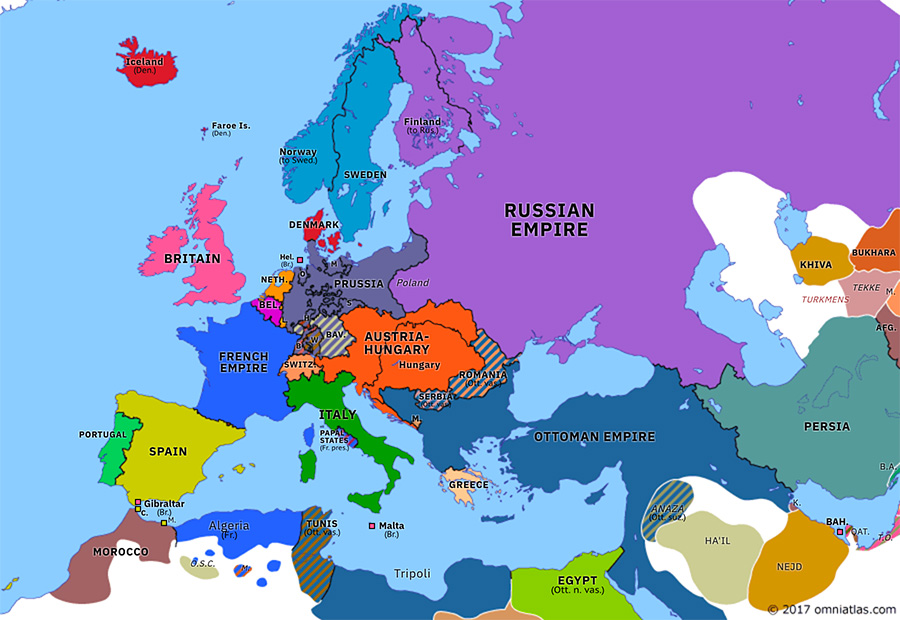
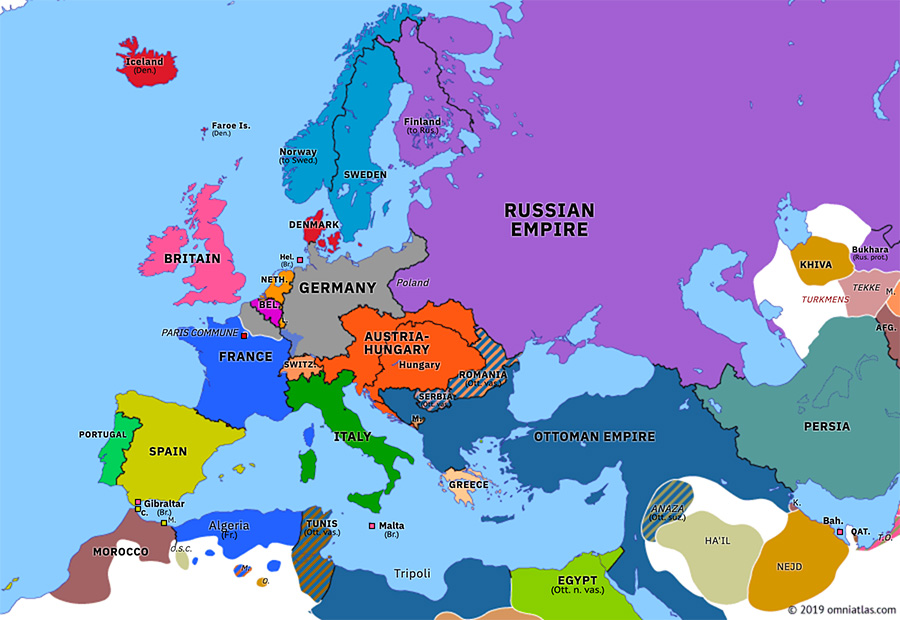
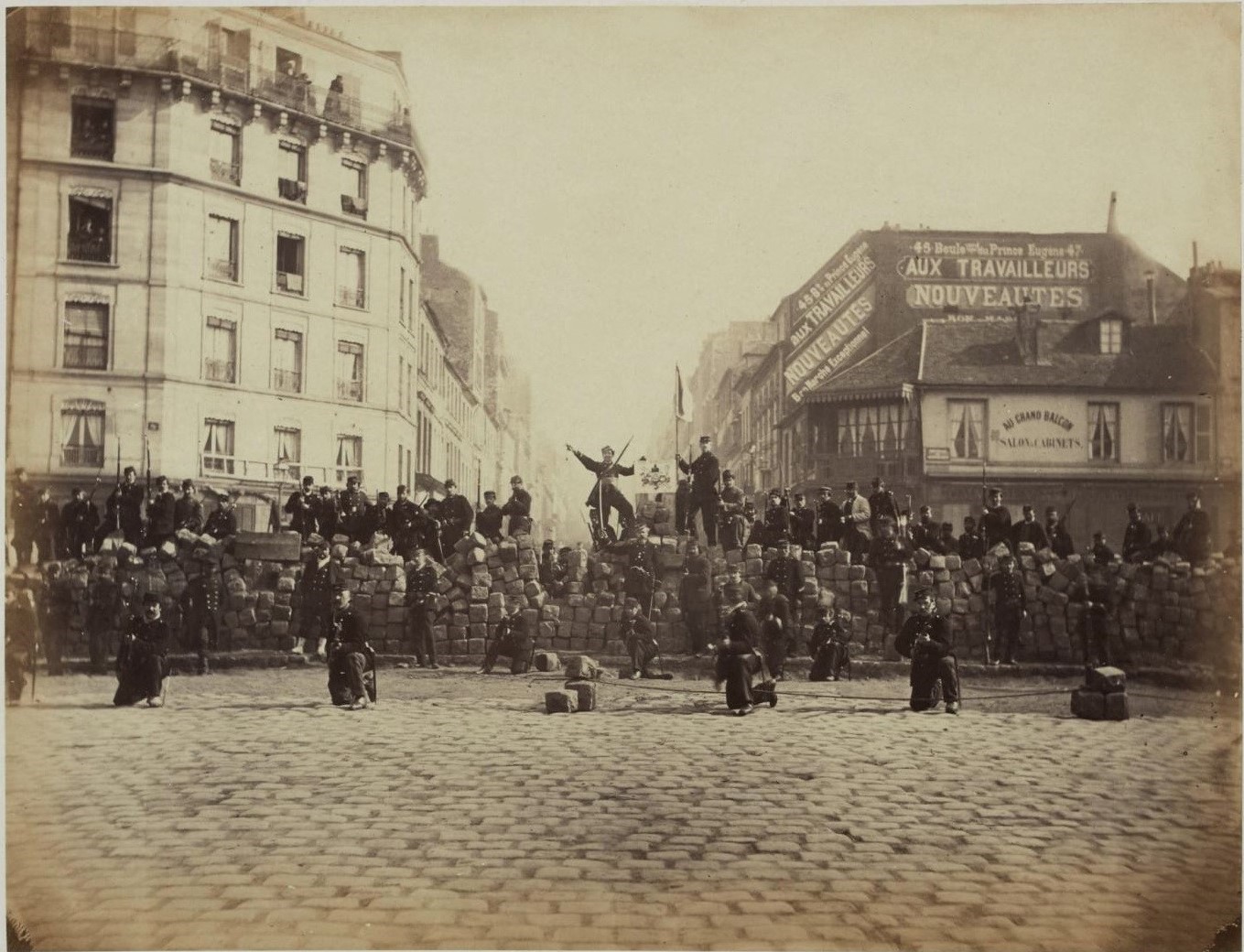
- 3rd: war with France (1870)
- France declared war in August 1870.
- France had no international support.
- Bismarck hoped war with France would inflame nationalist sentiment.
- Right after France declared war, the Southern German states committed their forces to Prussia and the North German Confederation.
- Prussia had massive head start
- Railway system for Prussia runs east and west
- France’s primarily ran North-south.
- Prussia also had superior arms.
- Railway system for Prussia runs east and west
- France lost two terrible defeats and the French leader Napoleon III was even captured
- The French government then collapsed and a new republic was proclaimed that tried to hold out.
- The Germans then besieged Paris
- Parisians continued their resistance even in utter despair (survived on sewer rats and even the zoo animals for food.).
- Finally total despair and starvation brought surrender in January 1871.
- elected the Third Republic (March 1871)
- France to pay massive indemnity
- Lost Alsace and Lorraine
- Had to support German occupying forces until the indemnity was paid off.
- German Empire
- Jan. 1871, King William of Prussia was named Emperor of Germany.
- Southern German states joined the empire.
- German Empire was dominated by Prussian autocracy, by Prussian nobles and military, and by the Prussian Bismarck.
- Unification of all the German states (except Austria) made Germany the most powerful country in Europe.
- Led to the Paris commune (March - May 1871)
- refused to accept the peace
- The Third republic army marched on Paris to force it to capitulate
- The Parisians felt betrayed after what they experienced during the siege.
- They produced a new government of democratic shopkeepers.
- Their stated goal was to protect the “the social welfare of citizens”
- They produced schools for both boys and girls
- All while holding back the forces of the Third Republic
- May 21, Third republic broke into Paris
- massacre
- 25,000 people killed
- people shot on sight
Uniting Disparate Peoples
- Italian Nationalism
- language
- Return of the Roman Empire
- German Kulturkampf
- Austrian Dual Kingdom: Austria-Hungary (1867)
- Prussian nationalism
- Tried to unify a German people
- Started by excluding Catholics Kulturkampf laws
- Backfired
- Didn’t unite Germany
- It caused Catholic Germans to feel excluded.
- Abandoned policy
- Contrasted with great amount of Jewish assimilation in 1870s
- Great period of secularization in Germany
- Christians and Jews.
- For Jews they started speaking German more than Yiddish.
- still many limits to assimilation
- excluded from certain cafes, restaurants, schools, and resorts
- But generally liberals still controlled a large part of the legislature and while Germany was repressive, it had to work with the liberals.
- Tried to unify a German people
- Austria-Hungary (1867)
- Suffer from the defeat of Lombardy to France and Italy, and then to the Prussians, led to a reorganization of the state
- Goal: prevent more nationalist losses.
- Returned to 1848
- Hungary given autonomy and a parliament
- They thought this might solve the problem
- One monarchy: two countries
- the kingdom of Austria-Hungary
- Austria gets parliament
- Hungary gets parliament
- Then created a common delegations (60 Austrian parliament delegates, 60 Hungarian delegates
- Met alternatively in Vienna and Budapest.
- Then created a common delegations (60 Austrian parliament delegates, 60 Hungarian delegates
- Led to two processes that encourages nationalism
- Germanisation in Austria
- Magyarisation in Hungary
- Non-Germans and non-Magyars experienced various forms discrimination and persecution.
- Policy of Magyarization became a goal of turning minority communities into Magyars
- Tried to force Hungarian onto non Hungarians
- State supported schools forced to teach in Hungarian.
- Suffer from the defeat of Lombardy to France and Italy, and then to the Prussians, led to a reorganization of the state