Politics After Revolution
Liberalism, Conservatism, & Nationalism
The Congress of Vienna (1814-1815)
- Redrew Political Lines of Europe.
- Reflected interests of the negotiating powers (England, Austria, Prussia)
- Concert of Europe
Conservatism Vs Liberalism
- Conservatism
- Anti-Revolutionary ideas.
- Support for traditional monarchies and social hierarchies.
- Traditional values and institutions (Christianity)
- Rule by the traditional elites.
- The moral economy.
- Liberalism
- Constitutional government.
- Expanding the Franchise.
- Politics of the new middle class.
- The invisible hand of the economy.
The Middle Class
- Not Nobles.
- Not Peasants.
- Well-to-do to rich urban class.
- guild masters, merchants, bankers
- Existed since 1500s.
- Prominent after 1750s.
Middle Class Culture in the Revolution
- Sans culottes (without breeches)
- Bourgeoisie fashion
Liberalism and the Middle Class
- The Franchise.
- Representation.
- The ideas of the French Revolution were good.
- England: Reform Act (1832)
- Reduces property requirements to vote.
- ~200,000 => ~400,000 voters
Liberalism Ambiguities
- Family and social order.
- Separate spheres for men and women.
- Fear of popular revolt: paid police force.
Nationalism
- Common history, culture, language.
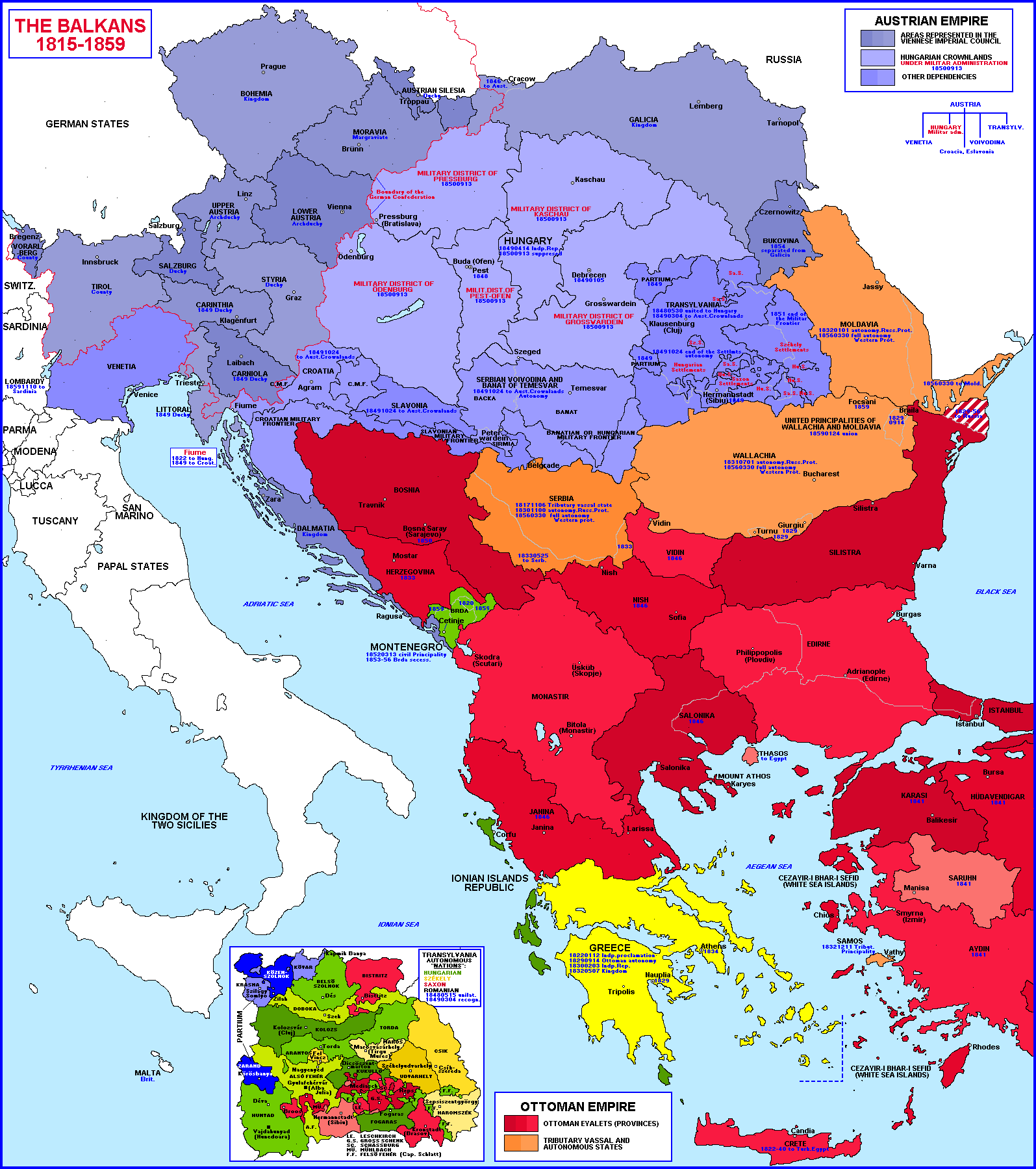
- Nations without Countries and Countries of multiple nations.
- Creating a nation.
- Inventing Tradition
- The Scottish Kilt
- Folk Tales & Grimm’s Fairy Tales.
The Greek Revolution
- Greek Revolution (1821-29).
- Early Success
- Egyptian intervention:
- Russian, British, French support in 1825.