What Was the Enlightenment?
A Basic Definition
More than great men thinking great things.
Where and how did the Enlightenment happen?
Created new ways of interacting with one another: Public Sphere
New discourses (ideas, theories, criticism, rumors, etc.) that challenged the existing political system (the Ancièn Regime).

A period that propogated new discourses (ideas, theories, criticism, rumors, etc.) that challenged the current political system.
Salons, coffeehouses, Mason Lodges, Academies away from the control of the court.
Renaissance Science: At Court
- Rediscovered Classics and Mathematics
- Pythagoras, Plato, Archimedes, Hermes
- Alchemy
- transforming nature: lead to gold
- Experimentation
- Francis Bacon (1561-1626) and empiricism
- Astrology
- Nicolaus Copernicus (1543)
- Johannas Kepler (1609)
- Galileo Galilei (1610)
- Renaissance Science and Sci. Rev.
- moved the location of cultural production from the
- became really interested in finding and copying and correcting copies of medicine works by Galen and astrology
- part of the reason they were interested in these works was to do the work
- astrology was
- part of the reason they were interested in these works was to do the work
- copied Pythagoras, Plato, Archimedes, Hermes Trismegistus (and then printed)
- they emphasized that the universe was based on mathematics
- their work was copied and printed and dissimenated.
- They became particularly inspiring in alchemy and astrology
- Alchemists rooted their work in the humanist tradition of applying ancient knowledge to the present
- They started attempting to reproduce and then build on the work.
- They started experimenting.
- led to empiricism
- Francis Bacon (1561-1626) recipient of King James I’s favor.
- Took his inspiration and procedures directly from alchemy.
- Became a proponent of empiricism
- Called for natural philosophy to begin with empirical observation.
- Then called for creating a hypothesis of what would happen
- Then test the hypothesis.
- Developed directly out of alchemical work
- Astrologers
- Became really interested in applying their learning from the ancients.
- But their observations did not match the Ptolemaic system (geocentric)
- Of the earth as the center of the universe.
- They began applying the mathematics to solve the problem
- Nicolaus Copernicus On the Revolutions of the heavenly bodies
- Argued (1543) that the sun was the center of the solar system (math wrong)
- Recognized conflicts between Ptolemy and Aristotle
- Secretary to the Bishop of warmia
- Johannes Kepler (1609) planets moved in elliptical orbits. (Imperial mathematician)
- Galileo Galilei (1610) observed four moons of Jupiter, proving Earth was not the only celestial body with object orbiting it.
- Astronomer of the Florentine court
- Then at the Papal court
- Nicolaus Copernicus On the Revolutions of the heavenly bodies
- But their observations did not match the Ptolemaic system (geocentric)
- Became really interested in applying their learning from the ancients.
17th-Century Science
Royal Academies
Republic of Letters
Isaac Newton (1687)
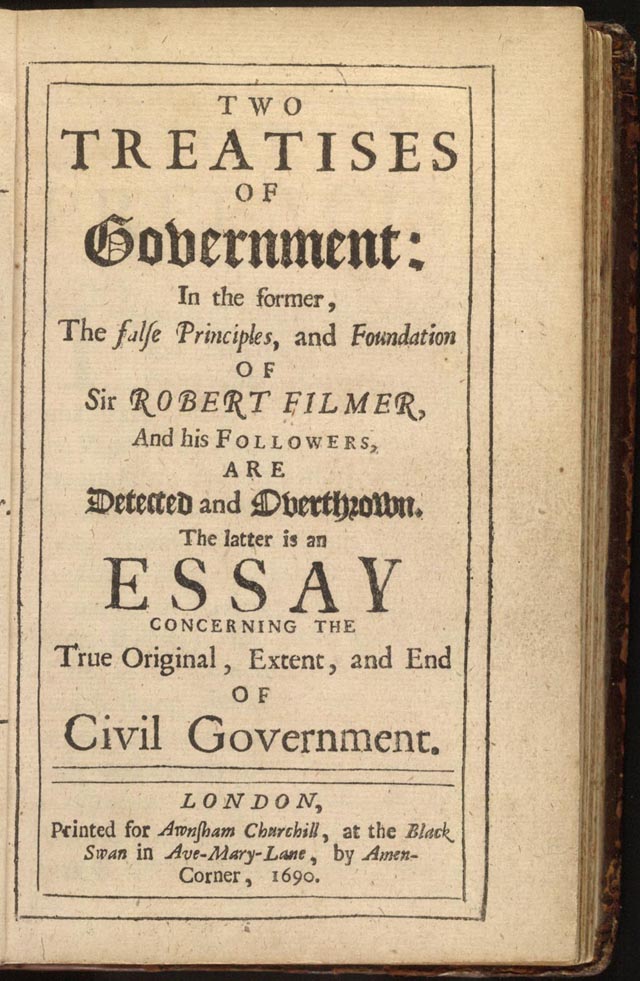
John Locke (1690)

- Academies and Republic of letters
- In the mid-17th century, royal courts began creating academies
- English Royal society (1660)
- France: Royal Academie of Sciences (1666)
- Berlin: Academy of Sciences (1700)
- These academies mixed with the courtly academics to share their findings and other stuff.
- Led to the Republic of Letters
- A group of people connecting through the post
- In the mid-17th century, royal courts began creating academies
- Under this new dynamic the genesis of enlightenment thought developed:
- Isaac Newton (1687) Mathematical Principals of Natural Philosophy resolved the problem of planetary movement with the idea of gravity
- A force made things fall and could not be interrupted.
- Proved you could calculate the actions of the world
- Took awhile to influence people by mid 18c, it had caught on.
- had few practical affects
- But people wanted to apply scientific thought to other areas.
- John Locke (1690) wrote Treatises on Government
- Argued that government ruled through a relationship between the inhabitants and the government
- That contract existed to protect individual property (land, money,)
- Property basis of political theory
- So those that created that agreement were those with property
- Supported a property limitation on voting
- Government of the propertied people.
- This comes right out of the Glorious Revolution theory.
- Isaac Newton (1687) Mathematical Principals of Natural Philosophy resolved the problem of planetary movement with the idea of gravity
The (High) Enlightenment: The Philosophes
Charles Louis de Montesquieu (1689-1755)
François-Marie Arouet (Voltaire) (1694-1778)
Denis Diderot (1713-1784)
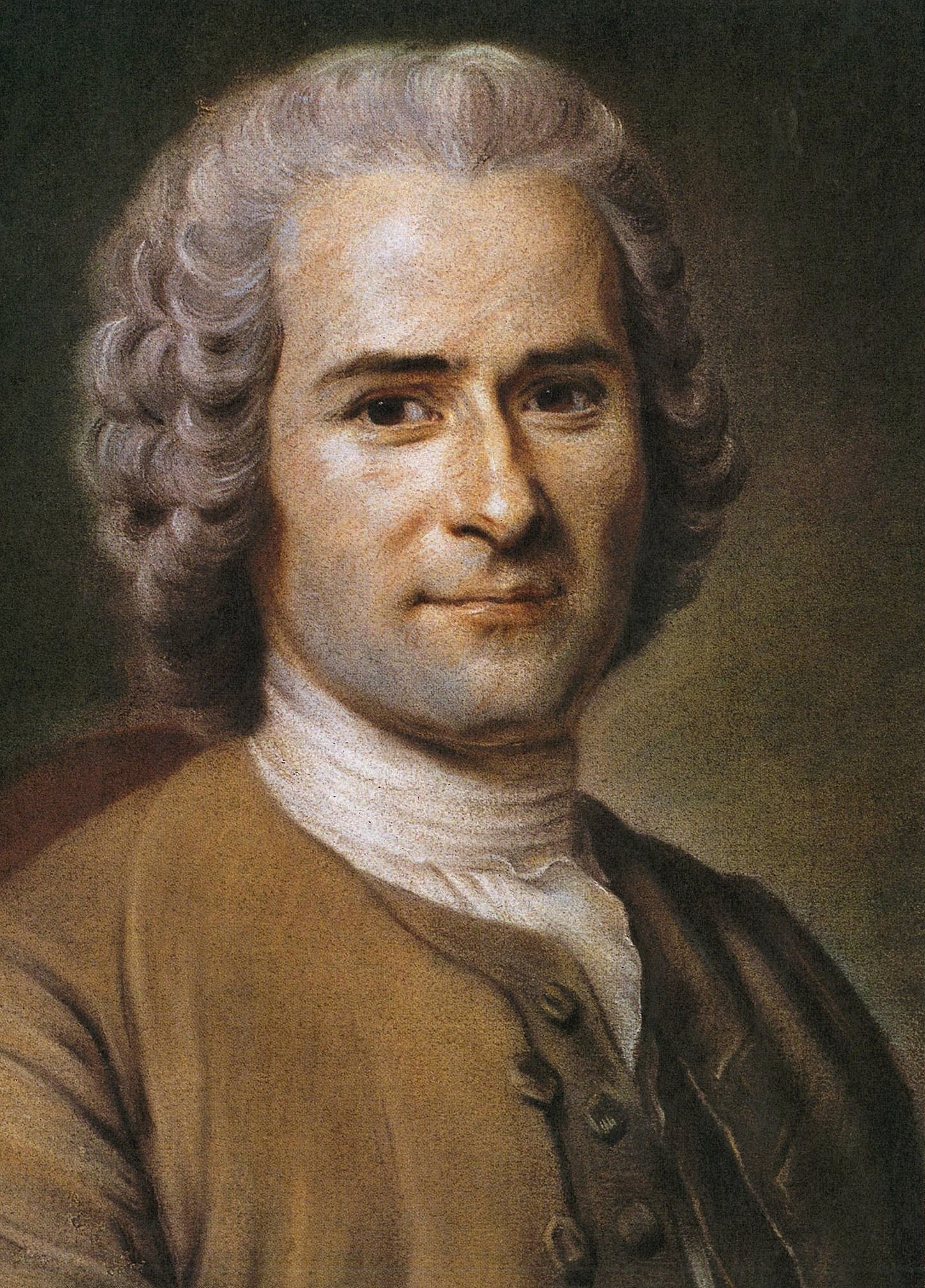
Jean-Jacques Rousseau (1712-1778)


Enlightenment
- Took the principals and methods of the intellectuals of the Scientific Revolution and applied them to social issues
- Driven in reaction to the calamities of the Wars of Religion, and especially the 30 years war, these intellectuals posited that reason as opposed the unquestioned authorities of traditional wisdom (i.e., the Church, religion, the classics) should be the ultimate arbiter of information and understanding the world and society.
- Philosophes (literary people, professors, journalists, economists, political scientists, etc.), as they called themselves, took the new
- Montesquieu (1689-1755) apply sci rev to society
- Attempted to apply the scientific method to government to understand the natural laws of social and political relationships.
- Argued there were three different kinds of governments: republic, monarchy, and despotism
- Also argued that separating the judicial, executive, and legislative power (separation of powers) provided the greatest freedom and security for a state.
- Voltaire (1694-1778) anti-institutional (religious)
- From prosperous middle class family, studied law, playwright. (wrote plays, letters, essays, etc.)
- Critical of traditional religion
- Saw religious toleration as an ideal.
- Became a Champion for Deism
- Saw god as a great creator that created the universe and stepped away, not intervening in it.
- God was the Great watch maker
- Diderot (1713-1784) focused on collecting and categorizing information and disseminating it
- Was the editor of the Encyclopedia, a 28 volume compendium of knowledge.
- Discussed matters from government to religion, written by philosophes.
- Huge proponent in spreading ideas of enlightenment
- Sold to lawyers, doctors
- Jean-Jacques Rousseau (1712-1778) new radical theories on government extended Lockian idea
- Discussed the origins of political power, argued that peopled adopted laws and governors to protect private property, but had since been
- Wrote The Social Contract (1762) in which he argued that communities/societies had a contract with the government, which is how it came into being, thus the general will of the people placed the government in power, and if the government did not follow the general will, it could be replaced for breaking the social contract. Huge statement, considering most governments were monarchies that claimed a hereditary right to rule.
Enlightenment: Invention of Race
Montesquieu
David Hume 
- Not only did the sugar and coffee that was often produced on the colonies by African Slaves, Enlightenment philosophes tried to understand the demographic desparity in new ways.
- Previously slavery was justified due the “barbarity” of the Africans (meant lack of knowledge of the true religion).
- Montesquieu explained differences in cultures based on climates—connected hot climates with greater sexual drive, fewer inhibitions.
- Some attached these to characteristics of civilizations
- David Hume best demonstrates this
- He wrote in 1752 (Political Discourses): “No people living between the tropics could ever yet attain any art or civility.”
- In another book (Of National Character [1753]) Hume attached skin color to the role of climate in dictating the character of civilizations:
- “I am apt to suspect the negroes and in general all the other species of men (for there are four or five different kinds) to be naturally inferior to whites. There never was a civilized nation of any other complexion than white, nor even any individual eminent either in action or speculation. No ingenious manufactures amongst them, no arts, no sciences…Such a uniform and constant difference could not happen, in so many countries and ages, if nature had not made an original distinction betwixt these breeds of men.”
- Hume was rooting his ideas in nature, applying the same study of natural laws to the differences in race.
Causes of Enlightenment? The Economy
- But why do we get enlightenment?
- Coffee & Sugar
- Growing Wealth
- Growing Cities
But Why?
- The increase in wealth had a direct impact on the Enlightenment in three ways. And once again remember this wealth originated from Atlantic slave economy, based primarily on sugar and coffee.
- First: the growing wealth contributed to a dramatic growth in cities
- as more and more opportunities were available.
- Some of these opportunities were in writing and publishing like never before because more people had the ability to buy these books, and new institutions like the coffee house developed that purchased books and newspapers for their customers to read.
- Second, with the rise in wealth
- The royal courts lost their monopoly on cultural production. Previously, public intellectuals primarily resided at the court and were funded by the court. For instance, Galileo was a court astronomer, who even became an astronomer at the Pope’s court.
- In the eighteenth century, new centers of patronage developed, and new centers of intellectual exchange developed.
- The salon hosted by elite female nobles liberated intellectual pursuits from the prying eye of the royal officials, and public intellectuals could find new patrons and notoriety in these institutions. The Mason Lodges had a similar outcome as the salon, but as an all-male atmosphere, and it developed later in the century.
- Academies, though older, grew in prominence and became new places for public intellectuals to gain fame.
- Third: the rise of coffee and the coffee house:
- coffee was grown by slave labor in the Caribbean, and it was sweetened with sugar grown by slave labor in the Caribbean.
- The coffeehouse became another place for the public to gather, drink something that did not get you drunk, read newspapers or other books that were available, and discuss the politics and the news of the day.
- The coffeehouse became a center where enlightenment ideas spread into society and a public sphere began to develop (the idea that the government should be dependent on the people. Another way to say this is that the people began to imagine themselves as the origins of sovereignty rather than divine right monarchy). It spread enlightenment ideas even broader than the salons, academies, and mason lodges.
- Moreover, Coffee also became a mainstay of the salon in France where elites gathered to discuss philosophy and politics (see The Enlightenment and the Public Sphere for more on this). C
- These three conditions had a dramatic impact in liberating intellectual production from the prying eyes of royal and religious censors.
- For instance, Jean-Jacques Rousseau was one of the first authors to make a living as a modern author in the mid-1700s
- Most authors received pensions from the crown, or an academy or some other noble patron that supported their writing.
- But by the middle of the century, Jean-Jacques Rousseau was able to support himself on his writings. He also had to do this because he seemed to make everyone angry and was forced to flee France, Geneva, and England multiple times under fear of arrest because of his writing.
- Most authors received pensions from the crown, or an academy or some other noble patron that supported their writing.
- For instance, Jean-Jacques Rousseau was one of the first authors to make a living as a modern author in the mid-1700s
The Enlightenment as Cultural Spaces
- Royal and Regional Academies
- Salons and Salonnières
- Masonic Lodges
- Coffeehouses, we will come back to this.
- How did enlightenment ideas get around?
- came into elite popular opinion
- public sphere
- Those interested in ideas an politics
- public sphere
- 3 major ways
- Academies that developed in 17th c.
- not university
- group of erudites (smart, educated people)
- got together to discuss idea
- Answered responses about science and religion, ideas, and had contests about the answer.
- Salons
- gathering of elite people interested in the life of the mind
- Hosted by women.
- Came to eat drink and discuss ideas.
- had to receive a
- Mason lodges
- begin in Scotland
- secular institutions
- talk about russeau, diderot, voltaire, etc.
- Academies that developed in 17th c.
- But also the coffeehouse
- High Enlightenment end in 1778 (Rousseau and Voltaire, die)
- no more big time philosophes
- new generation of would-be philosophes
The Public Sphere
- Printing Explodes
- Grub Street authors
- Coffee Houses, yes again.
- Emergence of Public Sphere (sovereignty re
- new source of sovereignty (nation)
- Enlightenment literature was censured
- ways lawyers and legal briefs circulated ideas
- couldn’t censure legal briefs.
- Jansenism (crisis in 1750s and 1760s)
- Calvinists that went to mass.
- lawyers begin defending the Jansenists and see the actions of the king as despotic
- legal briefs criticize the crown.
- Argues monarchies can behave despotically, and the nation can be betrayed by bad government.
- 1760s and 1770s, issue of Parlement
- Legal breifs begin questioning if the monarchy is betraying the people (the nation).
- Nation becomes invested with moral quality.
- lawyers play role in this.
- Johns Wilks
- call out the British political system. in the newspaper 45.
- part of a cultural revolution.
- Rise of Causes Celebres in 1770-1790s in France.
- publication of private affairs from Versailles
- Diamond Necklace affair (1785)
- Cardinal Rohan-Soubise is snubbed by queen wanting access to power.
- he begins writing forged replies from the queen with another man name La motte.
- Louis XV commissioned a necklace that was super expensive. (1.6 m livres)
- Louis XVI also turned it down.
- conned Cardinal Rohan-Soubise into meeting a prostitute dressed as Marie Antoinette.
- real jewels supposed to be purchased, but the jewels are stolen through all this.
- cardinal is arrested.
- he is put on trial.
- lawyers who defend him portray him as a victim of a regime that is becoming despotic.
- parlement acquits the cardinal.
- helps erode the crown.
- lawyers who see themselves representing the french nation treat him as a victim of hte increasingly despotim monarchy.
- Enlightenment had big impact on society that spread the