The Medieval Church
- The Mass
- Purgatury
- Good Works
- The Spiritual Economy
- The Mass
- came to participate in the eucharist
- when the priest came in front of the congregation to represent them as they preyed to god collectively. (priest had back to congregation)
- then they collectively participated in the eucharist
- when they recreated the last supper
- but rarely did the congregants take the eucharist (a few times a year on high holidays [easter, Christmas, etc.]
- And they never took the eucharist in both kinds (only the wafer, never the wine).
- During mass, the laity was able to gloryin the corporeal presence of Jesus Christ
- Transubstantiation
- accident of hte wafer stays the same, while the substence turns to jesus as a miracle from heaven through the acts of the priest.
- Transubstantiation
- then they collectively participated in the eucharist
- Mass was the highest order of prayer.
- Purgatury
- A place between heaven and hell
- the location the vast majority of congregants suffered away their sins to be purified before entering heaven.
- Good Works
- Good works limited one’s time in purgatury.
- Fundamental part of getting into heaven
- almost everyone expected to go to heaven
- but almost everyone also expected to spend time in purgatury first.
- Good works was the process of counter-balancing their sins to limit time in purgatury
- The best work was preying for another’s soul.
- great phrase: reparations for sin.
- The Spiritual Economy (or a Purgatury industry)
- Good Works limited the amount of time in purgatury
- Prayer for others’ soul in purgatury was a good work
- example:
- A woman gives a beggar a coin (good work) -. the beggar preys for the woman’s soul (good work)
- Those who crossed a bridge, preyed for the donor of the bridge.
- One could prey for the soul of those in purgatury
- They expected those in purgatury to reciprocate because they had so much time available to them.
- example:
- Endowment of masses
- When people died, they left money in their will to pay for the church to perform masses specifically for an individual’s soul
- most churches had many altars that would have masses sung most of the day to fulfill these duties.
Early Challenges to the Church
John Wyclif (1328-1384)
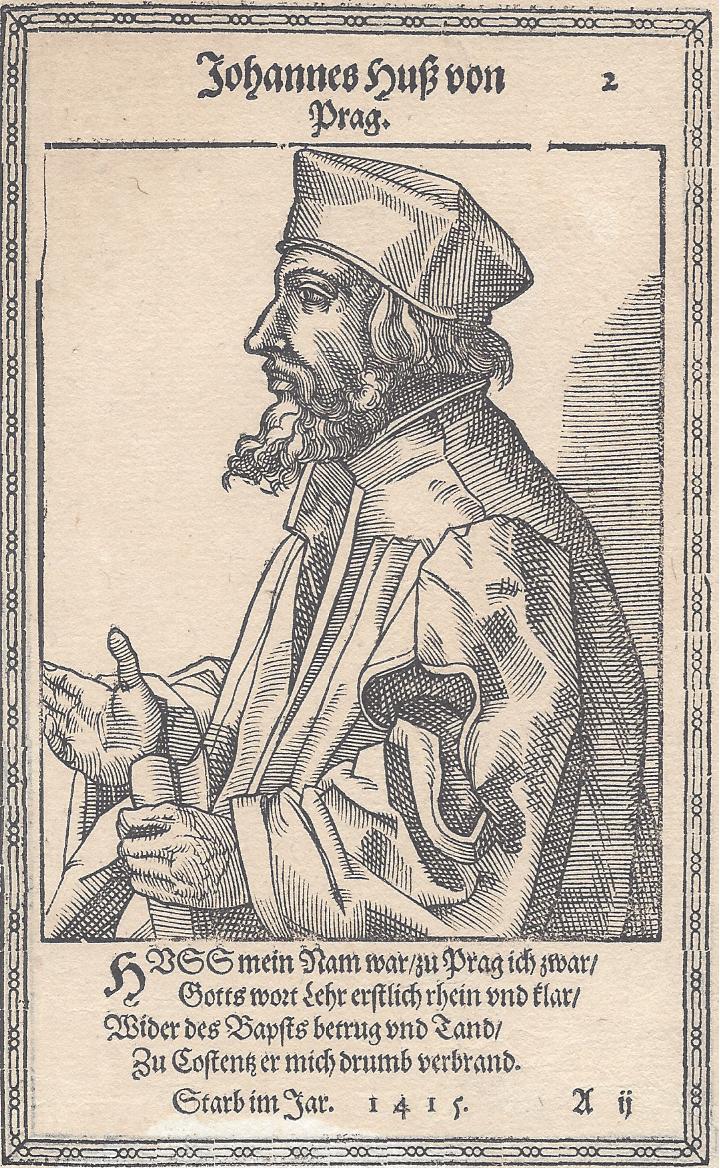
Jan Hus (1370-1415)
Why Limited Impact?


- John Wycliff (1328-1384) (the Lollards)
- university lecturer in Oxford
- Taught that a true church was accessable to the laity through the bible that didn’t need to be interpreted by the priest.
- It was available to all, not just the clergy.
- Began translating the bible in to English
- He taught that the bible was the way to learn about God, not the Mass, which was a devilish perversion.
- He died in 1384, but his followers continued.
- They flourished among some of hte nobles and the landed gentry.
- They copied their manuscripts and bible translations.
- But the English outlawed the translation of the bible. - And the wars of the roses in the 1450s led to a greater connection between the English kings and the clergy to cement the rule of whatever king was in charge at the time.
- Manuscript copying generally fell out of favor of Lollards by 1450,
- Jan Hus (1370-1415) (in bohemia, modern Czech Republic)
- Wyclif literature spread to Central Europe to Jan Hus (dean of philosophy at Prague University)
- Wyclif pushed for church reform
- Gained support of Czech nobility
- And received support from all levels of society (nobility, bohemian clergy, and universities)
- Taught that the mass should be sung in Czech, the language of the people
- and that the eucharist should be taken in both kinds (wine and wafer).
- Wyclif was summoned to the Holy Roman Empire
- Under safe travels promised by Emperor Sigismund in 1415.
- To the council of Konstanz (1415).
- He was then burned at the stake.
- Gained support of Czech nobility
- It created a revolt in Bohemia.
- They created their own church in Bohemia independent from Rome
- Their church leaders became very de-centered after the 1470s.
- Control of the church was managed under the nobles and city leaders (similar to majesterial reformation).
- Why Limited Impact
- No Printing Press
- Limited Scope of Challenges
- Never questioned the fundamental focus of Salvation, mass, or economy of salvation
Setting the Foundations for Change
- Modern Devotion
- Printing Press
- Religious Humanism
- Desidarius Erasmus (1466-1536)
- Modern Devotion
- A more individualistic view of devotion
- Trying to understand God and Jesus.
- Developed in the 15th century (1400s)
- Devoted to empathising with the suffering of christ.
- Dedicated the the preyer economy.
- Didication to meditating on the passion (suffering of christ)
- Printing Press
- Created a more internalized religious devotion that added onto the Modern Devotion.
- Religious Humanism (16th century)
- Wanted to return to the original sources.
- application of humanist method to the bible
- Desidarius Erasmus
- son of a priest
- Became the secretary of the Bishop of Cambrai
- He became one of the first bestsellers in 1500
- Then turned his focus to Christian texts
- He learned Greek
- Then he started producing critical translations of Christian texts
- Translated the bible (1516).
- Removed the Johanine comma.
- Retranslated a word from the Vulgate (do penance) to in his translation (repent), a different meaning
- Retranslated the Hebrew allegories that foretold a virgin would bare a son Immanuel (the Hebrew reads a young woman)
- So he clarified his position: he believes in the virgin birth, even though it was not supported in the bible.
- This represented a central problem: the issue of scripture vs tradition.
- Many read the religious humanists and questioned the church and its teachings
- Humanists looked at the discrepancies and many thought they were part of the same perversion that had happened to the classics during the medieval period
- They needed to return to the origins of the early church before as they saw it the perversion of it by the Medieval church.
Theology of Martin Luther (1483-1546)
Augustinian Monk
Salvation by Grace Alone
Recourse by Faith Alone
Know God by Scripture Alone

The Rupture
- Indulgences
- 95 Theses (1517)
- Luther Declared a Heretic (1520)
- Diet of Worms (1521)
- Indulgences
- paid for the building of projects
- the payments returned time of purgatury.
- based on three assumptions
- God demanded repentence for sins
- Jesus has an infinite amount of merit to extend to those on earth. (add to that all the saints)
- Pope as the vicar of Christ on Earth,
- it would be cruel of him not to extend that merit to the benefit of his parishioners.
- based on three assumptions
- 95 Theses (1517)
- 1516, the church extended this practice to the dead already in purgatory.
- Led Luther to write 95 theses
- Intended to promote a public disputation on the practice of indulgences
- A typical behavior at the time
- Very academic.
- Posted the theses to the castle church doors in Wittenberg
- Intended to promote a public disputation on the practice of indulgences
- The theses got printed
- Created a pamphlet war.
- Also led to a series of Public debates
- Luther railed about justification by grace alone
- and the problems of indulgences
- They focused on the authority of the Pope.
- Luther railed about justification by grace alone
- Luther declared Heretic (1520)
- Luther responded: wrote a series of pamphlets that were increasingly militant
- At one point claimed the Pope was a threat to the good government of the Holy Roman empire.
- Luther responded: wrote a series of pamphlets that were increasingly militant
- Diet of Worms (1521)
- given safe conduct
- left safely
- But immediately declared heretic and placed a call for his arrest.
- He went into hiding under the support of the: Frederick III (the Wise), Elector of Saxony
- During his hiding he translated the bible
- fast and loose with translation
- Added words and phrases that emphasized his reading
- Only faith where it just read faith for instance.
- Life to eternal life
- Deliverer of Israel to Savior
- Added words and phrases that emphasized his reading
- fast and loose with translation
- Luther made outlaw of empire
- But he could have safe conduct that would be honored.
- Allowed to leave without arrest.
- Elector of Saxony
- During his hiding he translated the bible
The Reformation Spreads
Printing Press
Huldrych Zwingli (1484–1531)
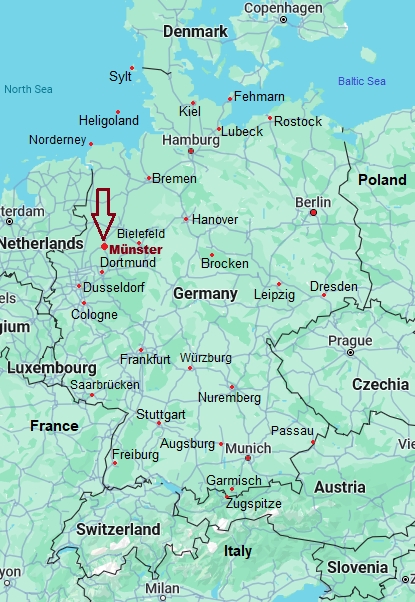
Anabaptists in Munster (1534–1536)
John Calvin (1509–1564)
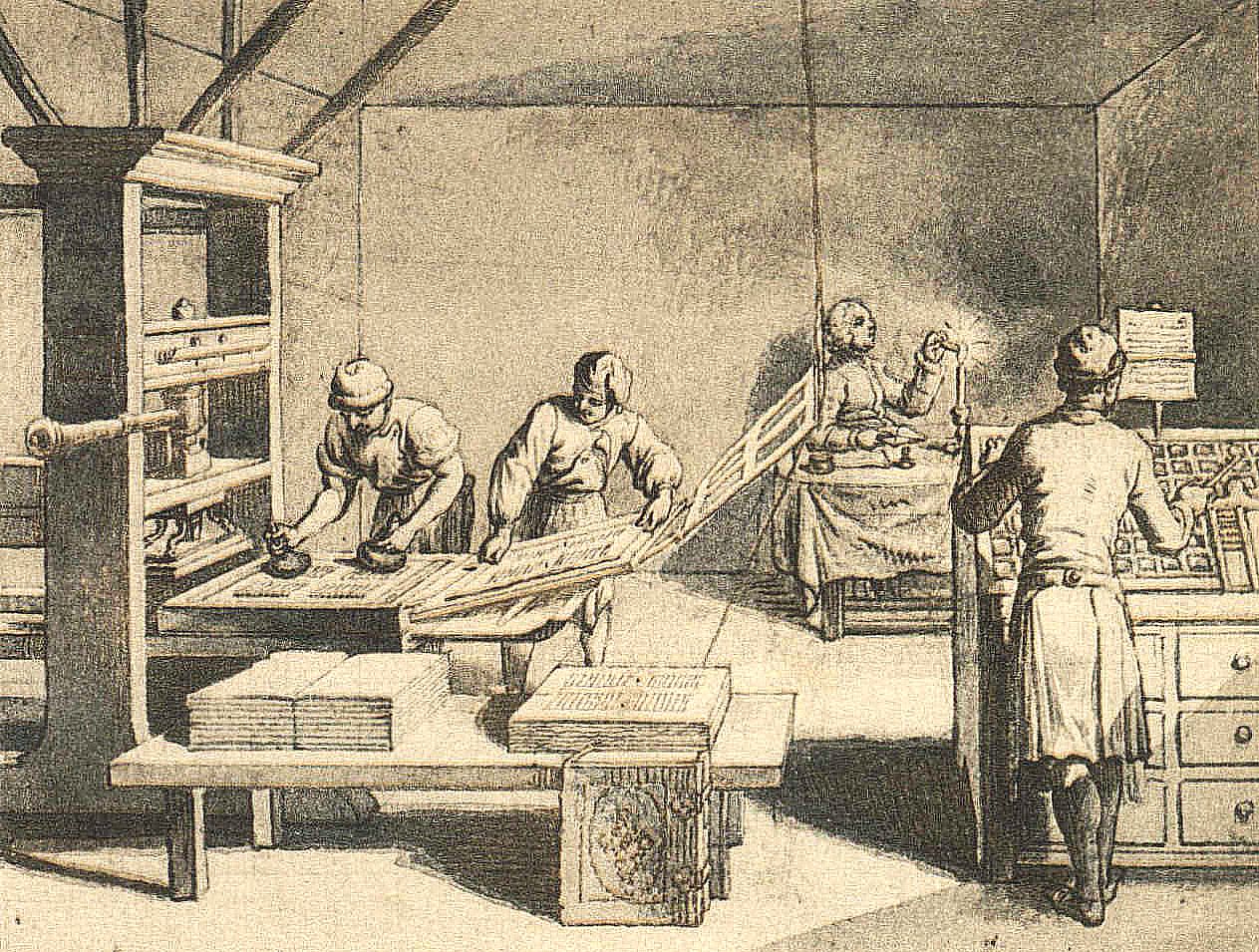

- Printing Press
- All these disputes took place in public through the pamphlet
- Huldrych Zwingli (1484-1531)
- Distinctly influenced by Erasmus, reading the translated bible
- Began comparing current church to church of Paul and apostles
- Also read Augustine and came to same pessimistic view of human kind.
- Claimed no influence from Luther
- But if true, that they came to the same conclusions independently at the same time, it is the greatest coincidence of the sixteenth century
- 1518, became a pastoral priest in Zurich
- 1519, bagan preaching from Matthew, ignoring the official liturgical callendar of hte church.
- 1520, stopped taking pension from Rome
- Began preaching justification by faith, grace, and scripture alone.
- Began calling the scripture the divine law.
- A difference from Luther, who distinguished between law and gospel.
- Preached that the Eucharist was a symbol and did not actually transubstantiate
- A major division with Luther
- Preached that images should be prohibited because of the commandments.
- Major division with Luther
- In Zurich, the city became the churhc and the churhc the city
- Zwingli thought very few would be saved.
- Diet of Speyer (1529)
- A colloquy where Zwingli and Luther met to unite the reform movement
- They shut down over transubstantiation
- Luther accepted the real change
- Zwingli did not accept it
- They almost came to blows.
- Distinctly influenced by Erasmus, reading the translated bible
- The Anabaptists in Munster
- Zwingli never went so far as to avoid question infant baptism,
- But many of his followers did, the ultra-Zwinglians, or Anabaptists
- Challenged infant-baptism
- Argued that baptism was an oath that could only be taken in adulthood.
- They were then combined witha large contingent of followed Melchior Hoffmann who proclaimed that the end times were coming. (around 1533)
- His followers declared Muster the new Jerusalem and
- Anabaptists seized control of the city by 1534
- Soon they were besieged by an army of Lutherans and Catholics
- During the siege the Anabaptists instituted new reforms to bring about the end times (that were supposed to end in April 1534)
- Redistributed property for communal use
- City notables exempted
- Instituted polygamy
- (to make God’s chosen increase and multiply)
- John Calvin (1509-1564)
- Originally a humanist lawyer in Paris
- Came to the Reformed faith (in the Zurich model)
- In 1530s, he fled Paris as an anti-reform movement took off
- Went to Basel from 1534-1536 to write An Instruction in Christian Faith (or the Institutes from the Latin name)
- Expanded in 1556
- Ended up in Geneva in 1536.
- They became a Mecca of sorts to spread the reformed faith
- The distinctive religion of Calvin was focused on double predestination
- Inherently something that already existed but that he reemphasized
- The idea that while the elect were destined for heaven
- The non-elect were destined for hell.
- Inherently something that already existed but that he reemphasized
- They created a printing empire to sell religious books across Europe and especially to France
- Calvin’s Institutes became a major part of that he kept rewriting and selling
- The distinctive religion of Calvin was focused on double predestination
- They also remade the city to prevent a Munster
- He created an eldership that operated citywide
- Pastors to do general ministry
- Doctors responsible for teaching at all levels
- then created the consistory:
- the city’s pastors and 12 lay elders
- This was an institution that existed besid the city leadership, but had significant power
- It could submit anyone to excommunication
- it could publicly humiliate Genevans for not acting godly
- For instance, Calvin wanted to stop Genevans from dancing.
- it could publicly humiliate Genevans for not acting godly
- The Calvinist church acquired great control over city administration in this way
- He created an eldership that operated citywide
The English Reformation
Henry VIII (r. 1509–1547)
Edward VI (r. 1547–1553)
Mary I (r. 1553–1558)
Elizabeth I (r. 1558–1603)


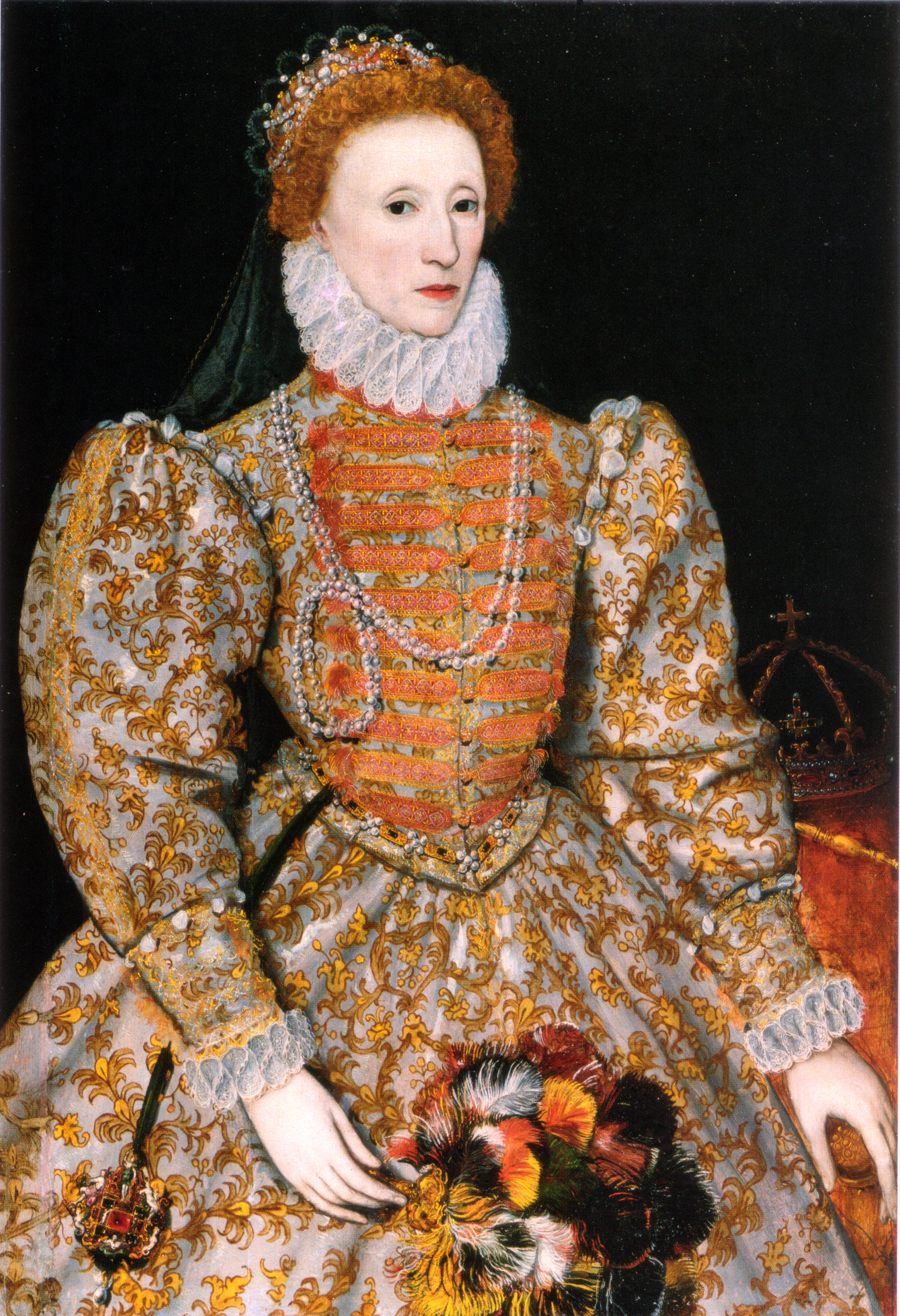
- Henri VIII (1509-1547) married to Catherine of Aragon
- blamed her for not having children
- wanted divorce, wasn’t given it
- concluded he was the supreme head of the church within his dominions
- Act of Supremacy and Act of Submission (1534)
- spelled out the royal supreme headship over the church of England
- clergy must swear oath to the king.
- First king to break with Rome.
- Thomas Cranmer Became the Archbishop of Canterbury in 1533.
- he annuled the marriage
- Think of the church in England as the Catholic Church of England.
- Dissolution of the Monestaries (1536-1541)
- King Edward VI (r. 1547-1553)
- Begins instituting Reform
- Archbishop Thomas Carnmer commissioned the Book of Common Prayer in 1549.
- followed generally Lutheran leanings.
- But slowly became more reformed
- This became clear in the Prayer book of 1552
- the eucharist became fully symbolic.
- Queen Mary I (r. 1553-1558)
- reinstituted Catholicism
- clear sign that England had not been converted yet,
- Other than some minor challenges, people returned to their original worship.
- They took their Catholic challaces and other paraphenalia out of hidden cupboards and started using them again.
- The biggest complaint about Mary was not her Catholicism but her marriage to
- Queen Elizabeth I (r. 1558-1603)
- Elizabethan Settlement (1559)
- returned to the 1552 book of common prayer
- but supported a conservative protestantism
- church imagery
- lavish music
- lack of frequent preaching
- suspicion of married clergy
- Kept much of the structure of the church (bishops, priests, deacons)
- but had a conservative protestant theology
- nonsubtantiation
- justifcation through grace, and faith alone (scriptural superiority)
- But also kept many of hte ordinants of the church
- Not acceptable to criticize the church of england.
- but had a conservative protestant theology
- but supported a conservative protestantism
- Demanded outward support for the church
- attend church
- participate in church
- donate to the church of england
- But what you do behind closed doors was fine
- returned to the 1552 book of common prayer
- Elizabethan Settlement (1559)